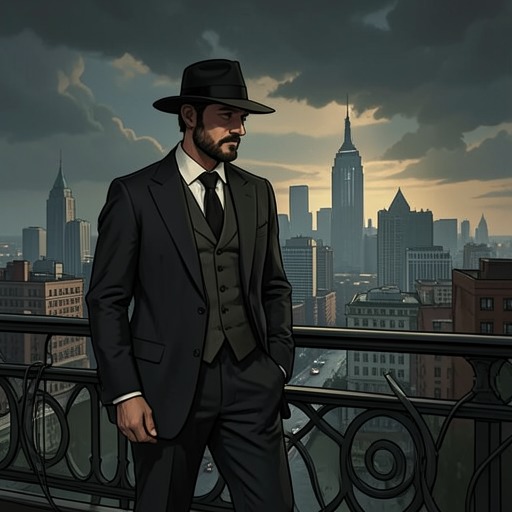
Aschenbach's return to the Lido after his luggage is misdirected
Death in VeniceAschenbach's return to the Lido after his luggage is misdirected is the accidental reversal that changes a planned departure from Venice into a renewed stay. The lost trunk supplies the immediate excuse to turn back; Aschenbach's recognition, on returning, that Tadzio made departure difficult reveals the emotional force beneath that excuse. What first appears as an inconvenient travel mistake thus becomes a hinge in the story: he is returned to the setting and routine from which he had meant to escape.
Background and Decision to Leave
Aschenbach has resolved to leave the beach hotel and announces that unforeseen developments require his departure the following morning. He settles his account, reads the newspapers on the rear terrace, and prepares his luggage. Yet by morning, the decision has already begun to falter. The overcast sky remains, but the air seems fresher; remembering the previous day on the beach, he wonders whether he acted hastily, out of temporary diffidence and indisposition. He regrets that he will miss another forenoon there, but tells himself it is too late to change course.
At breakfast, the hotel porter urges him to leave for the connection through Hotel Excelsior, although Aschenbach sees that more than an hour remains before his train. Irritated by the pressure, he insists on finishing his meal and says he will make his own arrangements, including taking a cab or the public steamboat if necessary. He even takes time to read a newspaper. His resistance to the hotel’s timetable briefly restores a sense of control, but the departure proceeds: as he finally gets up, Tadzio comes through the glass door.
The Mistake and Reversal
On the steamboat toward the station, Aschenbach’s conflict intensifies. He feels that leaving is impossible, yet turning back also seems impossible; time presses him forward while his desire divides against itself. At the station, he learns that his large trunk has already been transferred—not toward his intended journey, but to Como, after being sent in the wrong direction with other foreign baggage from Hotel Excelsior’s express office.
The misdirection supplies a concrete obstacle at the exact moment Aschenbach is struggling to depart. He says he will not travel without the trunk and decides to return to the beach hotel to wait for it. The hotel employee goes to see whether the baggage can be stopped but comes back unsuccessful. Aschenbach arranges for the cancelled ticket to be redeemed and secures a return by the company’s motorboat. Twenty minutes after reaching the station, he is travelling back along the Grand Canal toward the Lido. An ordinary logistical error has reversed the direction of his journey.
Return and Recognition
The return feels to Aschenbach at once absurd and exhilarating. He has just taken leave of the places he believed he was abandoning for good, yet he sees them again within the same hour. During the ride he conceals his high spirits beneath a show of resigned anger and imagines that the mistake may be corrected without serious consequence. The quick turnabout lets him regard himself, momentarily, as fortunate rather than defeated.
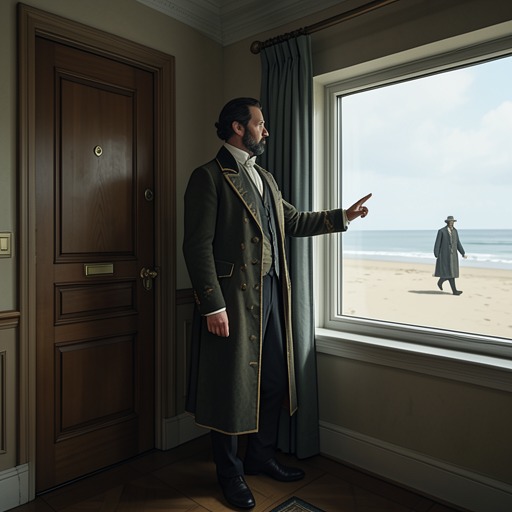
At Hotel Excelsior, a waiting omnibus takes him to the beach hotel. His former room has been given to someone else, but the manager offers another room with similar furnishings and a comparable position. Once settled, Aschenbach rests by the open window and looks toward the sea and beach. Around noon he recognizes Tadzio returning from the water in a striped linen suit and red tie. He almost forms a casual greeting, then understands that his response is not casual: the boy is the reason leaving had proved so difficult. He welcomes this recognition with a spontaneous gesture, slowly turning his hands palm-down and opening his arms, as though accepting what his struggle to depart has disclosed.
Consequences and Narrative Significance
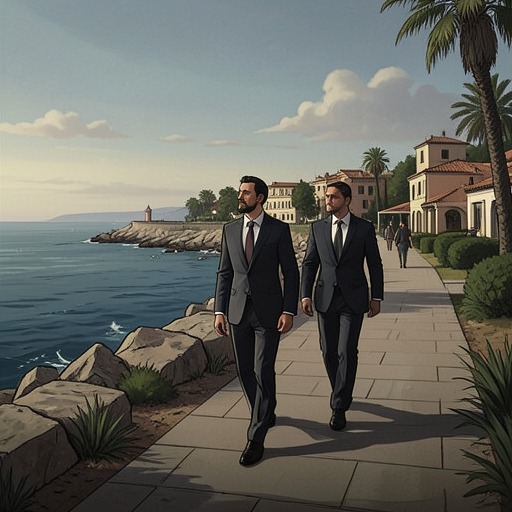
The return restores Aschenbach to the daily pattern that had made his stay precious. He sees Tadzio repeatedly in the hotel, on journeys to the city, in the square and on the streets, but especially during the long mornings on the beach. The regularity of these encounters makes continued observation part of the attraction of staying. Aschenbach stops attending to the end of his planned vacation, obtains more money, and worries instead that the Polish family may leave. The accidental return therefore does not simply postpone travel; it leads into a prolonged routine organized around the possibility of seeing Tadzio.
That routine is marked by restless sleep and early waking. Aschenbach retires when Tadzio has disappeared from view, then rises at dawn to watch the sunrise from his open window. In the light of these repeated days, the return looks less like a settled decision than the opening of a stay increasingly governed by desire and anticipation. Later, he secretly follows Tadzio and his companions through Venice, an episode the narration presents as a surrender of reason and dignity. At the end, while watching Tadzio by the water, Aschenbach appears to interpret the boy’s glance as an invitation and rises to follow. He collapses in his chair; after some minutes, others come to his aid, and he dies that day. The early reversal that returns him to the Lido thus stands at the entrance to a stay whose repeated pleasures deepen into pursuit and end in death.